Macro — Valuation
How expensive US equities are — and therefore the expected return over the next decade and the size of an eventual reversion, not when one happens. CAPE has been "expensive" for 10+ years; valuations this rich can persist. The trigger for a drawdown is financing conditions (the Risk tab), not the level here. Read percentiles as stretch, never as a sell signal.
Latest data 2026-01-01 → 2026-05-01 · percentile rank over full history + since-1990 baseline · click any chart to enlarge
Note: CAPE, ECY and Real ERP are monthly (through 2026-05-01); the Buffett Indicator and Tobin's Q come from the quarterly Fed Z.1 release, so they are current only through 2026-01-01. Each gauge and chart is stamped with its own as-of date.
1 · Shiller CAPE & Excess CAPE Yield
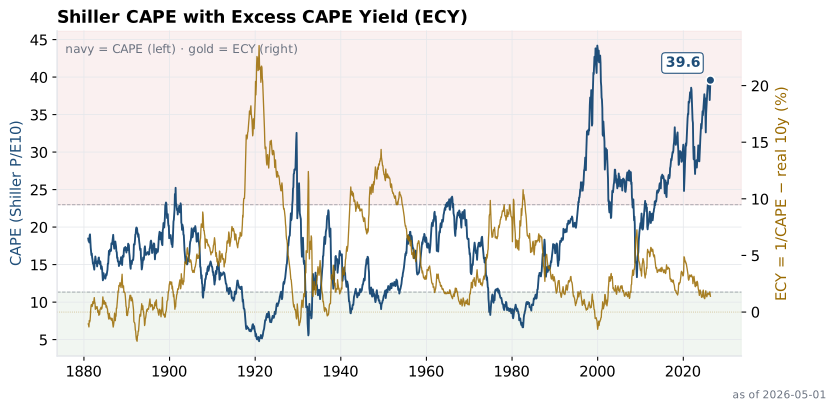
CAPE 39.6 sits in the 99th percentile of history (95th since 1990). STRETCHED: this maps to LOW expected real returns over the next decade and a larger eventual reversion -- it is not a sell signal or a timing tool; rich valuations can persist for years.
Shiller ie_data.xls (1881→). ECY = 1/CAPE − real 10y, his rate-adjusted CAPE. Bands = full-history 20th/80th percentiles.
2 · Valuation vs the next decade — the money chart
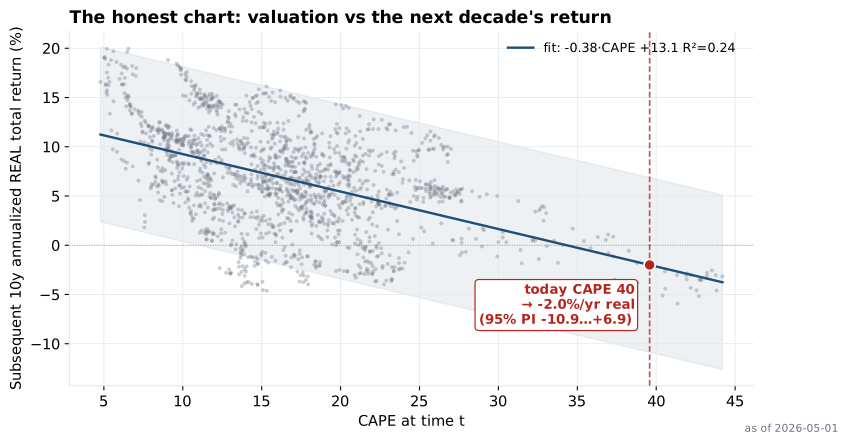
At today's CAPE of 40, the historical regression implies roughly -2.0% annualized real total return over the next 10 years (95% prediction interval -10.9% to +6.9%, R²=0.24). This describes the return distribution from this valuation — it does not predict when.
Each dot = a month since 1881; y = realized subsequent 10y annualized real total return (Shiller real TR price). Last 10y omitted (return not yet realized).
3 · Real Equity Risk Premium (Asness)
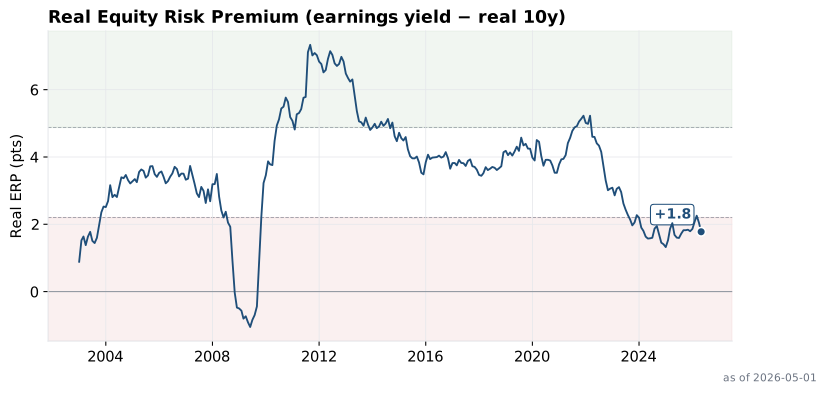
Real ERP +1.8 pts (trailing earnings yield minus the real 10y TIPS yield) is in the 13th percentile (13th since 2003). STRETCHED: equities offer little compensation over real bonds -- a thin long-run risk premium, not an imminent-drop signal.
Trailing S&P earnings yield (Shiller) − REAL 10y TIPS yield (FRED DFII10), 2003→. Real yield, not nominal, to avoid the Fed-model error; daily yield aggregated to monthly means, earnings forward-filled ≤4 months for the reporting lag.
4 · Buffett Indicator — corporate equities / GDP
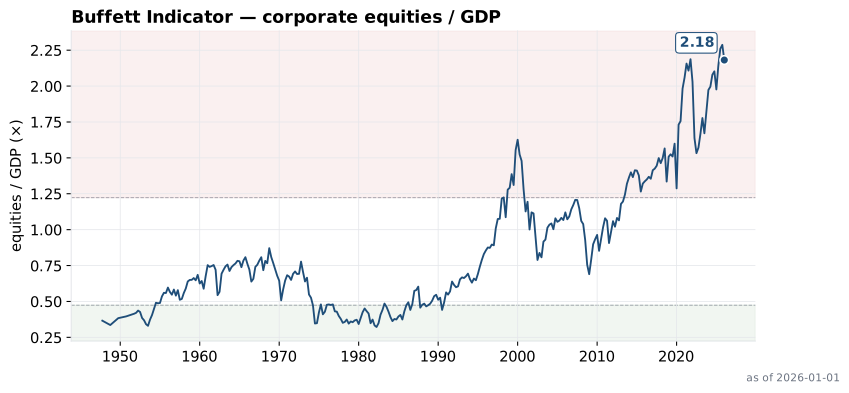
Corporate equities / GDP at 2.18 is in the 99th percentile (98th since 1990). STRETCHED: a high market-cap-to-output ratio implies low long-run returns. Caveats: globalisation lifts the ratio (foreign earnings aren't in GDP) and it ignores interest rates -- read it as a trend, not a trigger.
FRED NCBEILQ027S (nonfinancial corp equities, market value) ÷ GDP, quarterly 1947→. The daily Wilshire-5000 proxy is unavailable (discontinued on FRED); levels differ from total-market-cap versions, so the percentile is what matters.
5 · Tobin's Q
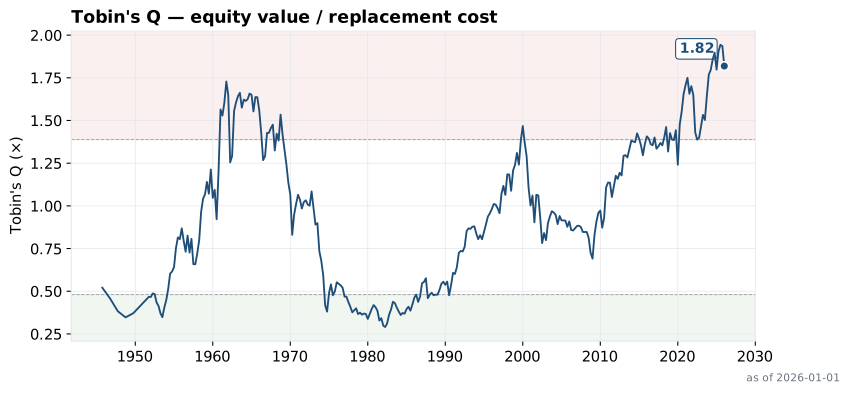
Tobin's Q 1.82 (equity market value / replacement-cost net worth) is in the 98th percentile (97th since 1990). STRETCHED: the market values corporate assets well above what it costs to replace them -- mean-reverts over decades, says nothing about timing.
FRED NCBEILQ027S ÷ TNWMVBSNNCB (replacement-cost net worth, equity excluded — verified via the Z.1 balance-sheet identity), quarterly 1945→.